
2025-2026 Keynote Speaker
Introducing United States Senator Ben Cardin
We are honored to welcome Senator Ben Cardin as the keynote speaker for the 2026 TU-BCPS Model United Nations Conference. Over nearly six decades of public service, Senator Cardin has emerged as one of the United States’ most respected voices on global human rights, democratic governance, and international security. As Chair of the Senate Foreign Relations Committee and the principal architect of the Global Magnitsky Human Rights and Accountability Act, he has championed efforts to defend human dignity, combat corruption, and strengthen democratic institutions worldwide. Senator Cardin will draw on his extensive experience to offer students a powerful look into the complexities of foreign policy and the responsibilities of global leadership.
Meet Senator Cardin
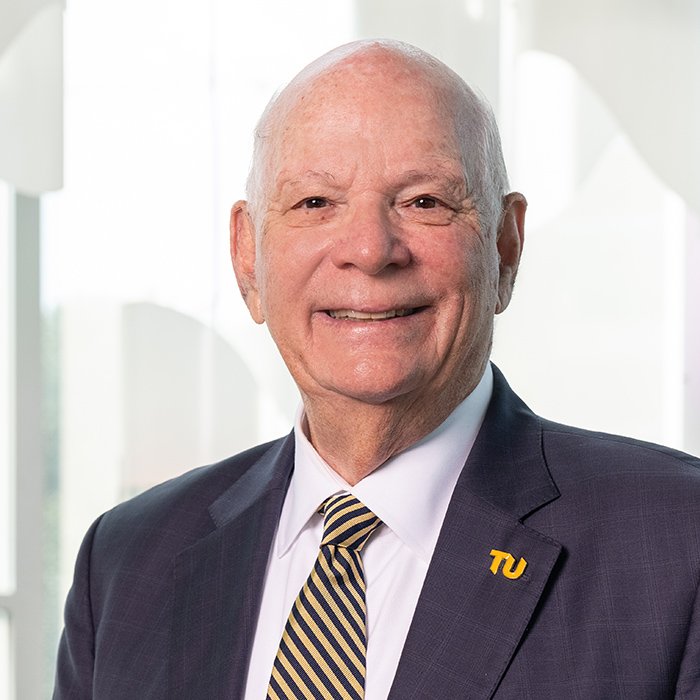
Senator Cardin is internationally known as the principal architect of the Global Magnitsky Human Rights and Accountability Act, landmark legislation that transformed the United States’ ability to respond to gross human rights violations and significant corruption worldwide. The Magnitsky Act empowers the U.S. government to impose targeted sanctions on individuals responsible for abuses, making it one of the most consequential human rights tools of the 21st century. After its adoption in the United States, the Magnitsky Act inspired similar legislation among U.S. allies and elevated human rights enforcement as a central pillar of international diplomacy.
During his Senate tenure, Cardin also advanced critical civil rights and equity initiatives through his work on the Judiciary Committee, championing efforts to prohibit racial and religious profiling, restore voting rights, and support gender equality. As a senior member of the Finance Committee and former chair of the Small Business Committee, he helped drive major bipartisan legislation including retirement security reforms, expansion of affordable health coverage, and the Paycheck Protection Program, which provided vital support to American small businesses during the COVID-19 pandemic.
Across all levels of government, Senator Cardin has remained deeply committed to strengthening communities, defending democratic values, and promoting justice at home and abroad. TU-BCPS Model UN is honored to welcome him as the 2025 Keynote Speaker.
A third-generation Marylander, Senator Ben Cardin has built a distinguished career centered on public service, principled leadership, and bipartisan problem-solving. After serving 20 years in the Maryland House of Delegates, including eight years as Speaker, he went on to serve two decades in the U.S. House of Representatives and recently concluded three terms in the United States Senate. Throughout his career, he has been widely recognized for his civility, integrity, and commitment to effective governance.
Senator Cardin’s long-standing dedication to strengthening democratic engagement is further reflected in his role as Co-Founder of the Ben and Myrna Cardin Center for Civic Engagement and Civil Discourse at Towson University. The Center serves as a dynamic hub for open dialogue, respectful debate, and active citizenship, which are core values that mirror Senator Cardin’s own legislative approach. Through programs, events, and experiential learning opportunities, the Center advances civil discourse and fosters inclusive conversations on complex public issues. Co-chaired by Senator Cardin and Myrna Cardin, an alumna of Towson University and former chair of its advisory board, the Center benefits from their shared vision and deep commitment to democratic participation.
Senator Cardin served as the Chair of the U.S. Senate Foreign Relations Committee, playing a pivotal role in shaping American engagement abroad by emphasizing the importance of values-based foreign policy. He promoted the centrality of democracy, anti-corruption, and human rights protections in U.S. relations with foreign countries. In this capacity, he strengthened oversight of international human rights abuses, promoted good governance initiatives, and advanced global anti-corruption frameworks. His leadership consistently underscored the principle that sustainable security and prosperity depend on respect for human dignity and the rule of law.